Is a Dishwasher Supposed to Drain Completely?
Almost, but not entirely. Most dishwashers leave a small amount of water — typically less than half an inch — sitting below the filter at the very bottom of the tub after a cycle. This is by design: that residual water keeps the drain pump seal lubricated between uses. If you see a tiny amount of water pooled below the filter level and your dishes are coming out clean, the machine is working normally.
What isn’t normal: water covering the filter, water pooling more than an inch deep, water still sitting in the tub hours after the cycle completed, or dishes coming out wet and dirty. If any of those describe your situation, something in the drain system needs attention. After 12 years of appliance repair across Huntersville and the Lake Norman area, dishwasher drainage calls follow a very consistent pattern — and the cause is almost always one of five things.
Why Is There Standing Water in the Bottom of My Dishwasher?
When a dishwasher finishes a cycle and water remains in the tub, something has interrupted the drain path. The dishwasher’s drain system works in sequence: water exits the tub through the filter and sump area, the drain pump pushes it out through the drain hose, and the hose routes it into either the garbage disposal or the sink drain. A blockage or failure at any point in that chain leaves water sitting in the tub. Here’s what we find most often:
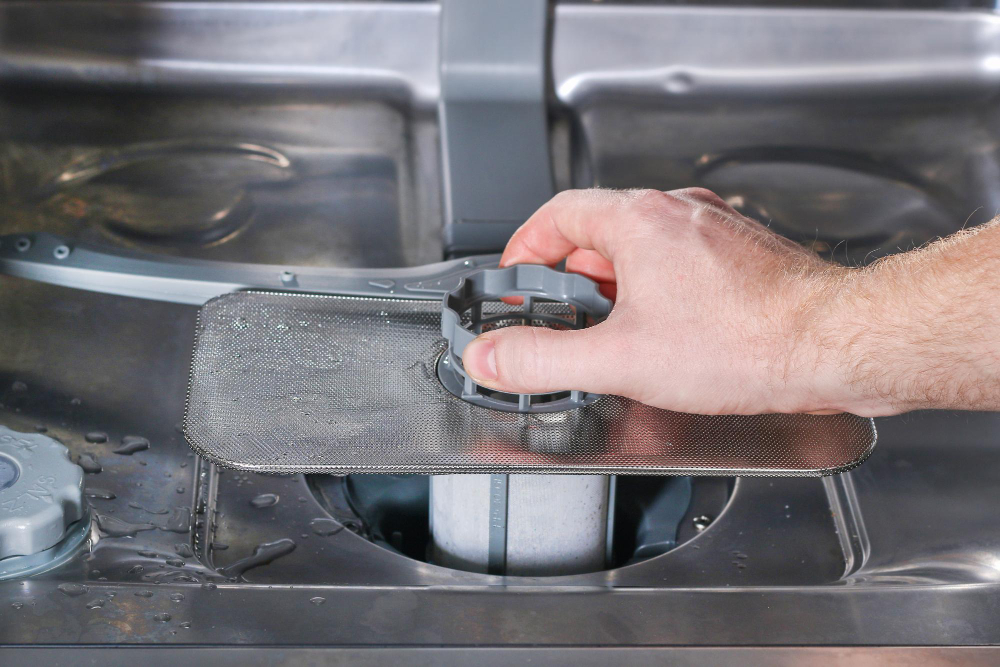
- Clogged filter. This is the cause the majority of the time — by a significant margin. The filter sits at the bottom of the tub and catches food particles, broken glass, paper labels from containers, and grease before they reach the pump. When it becomes packed with debris, water can’t pass through and drainage stops. Most homeowners have never cleaned their dishwasher filter. On machines with a removable cylindrical filter, it takes about five minutes: remove the bottom rack, twist out the filter counterclockwise, rinse it under warm running water with a soft brush, and reinstall. If the filter is clean and drainage is still slow, keep reading.
- Blocked or kinked drain hose. The drain hose runs from the pump to the garbage disposal or sink drain, typically routed under the cabinet. A hose that’s been kinked during installation, crimped against the cabinet wall, or clogged with accumulated grease will restrict flow partially or completely. A partially kinked hose is a particularly common culprit for a dishwasher that drains halfway but leaves an inch or two of standing water.
- Garbage disposal issue. On most built-in dishwashers, the drain hose connects directly to the garbage disposal. If the disposal is clogged with food debris, water backs up into the dishwasher drain path. There’s also a less obvious issue: if a garbage disposal was recently installed or replaced and the installer forgot to remove the knockout plug from the dishwasher inlet port, drainage will be completely blocked from day one.
- Clogged air gap. A small cylindrical device mounted on the countertop or sink deck near the faucet. It prevents dirty sink water from flowing back into the dishwasher and it can become clogged with debris over time. A blocked air gap restricts drainage without any obvious sign of where the problem is — because it’s a component most homeowners don’t know exists.
- Failed drain pump. When the filter is clean, the hose is clear, the disposal is working, and the air gap isn’t blocked — the drain pump motor itself may have failed. A working pump is audible during the drain phase: a consistent humming sound as water is pushed out. A pump that’s seized or burned out may be silent, or may produce a clicking or buzzing sound as it tries and fails to turn. Pump failure requires a technician and parts replacement.
Dishwasher Not Draining All the Way — What Causes Partial Drainage?
A dishwasher that drains partially — leaving an inch or two of water rather than a completely full tub — usually has a partial restriction rather than a complete blockage. The filter is the first place to check, because even a partially clogged filter restricts flow without stopping it entirely. A kinked drain hose is the second most common cause: the kink allows some water through but slows the flow enough that the pump can’t fully clear the tub before the cycle ends.
Modern dishwashers have a timed drain cycle — the pump runs for a set period and then stops regardless of how much water remains. If drainage is slow for any reason, the pump may stop before the tub is fully clear. Addressing the underlying restriction almost always resolves partial drainage without any control board work.
Dishwasher Repair in Huntersville
We received a call from a homeowner in Huntersville whose Bosch dishwasher had started leaving standing water in the tub after every cycle. The dishes were coming out with a film, and there was a faint sour smell. The homeowner had already tried running a cleaning cycle with a dishwasher tablet — no change.
Our technician removed the bottom rack and pulled the filter. It was completely packed — a dense mat of food particles, coffee grounds, and disintegrated paper from container labels. The filter housing screen beneath it also had significant buildup. After a thorough cleaning of both the filter and housing, we ran a drain cycle. The tub cleared completely in under two minutes. No parts needed. A cleaning tablet can’t clean a physically blocked filter — it treats drum surfaces, not the filter mesh. A $0 maintenance task had become a service call.
How to Keep Your Dishwasher Draining Properly
- Clean the filter monthly. Five minutes once a month prevents the majority of drainage failures we see. Twist out the cylindrical filter, rinse under warm water with a soft brush, and reinstall.
- Scrape dishes before loading. Large food particles, labels, bones, and seeds overwhelm the filter quickly. Removing them before loading extends the time between cleanings significantly.
- Run the garbage disposal before starting the dishwasher. If your dishwasher drains through the disposal, running it for 30 seconds first clears the path and reduces backflow into the drain hose.
- Use the correct detergent in the correct amount. Excess suds interfere with the drain pump’s ability to push water out efficiently. Dishwasher-specific detergent only — never hand dish soap.
- Run the dishwasher regularly. Extended periods of non-use allow grease in the drain hose to congeal and residual water in the pump to stagnate, both of which restrict drainage over time.
Frequently Asked Questions
Why is there standing water in the bottom of my dishwasher?
The most common cause is a clogged filter at the bottom of the tub. Food particles, grease, and debris accumulate in the filter mesh and block drainage over time. Clean the filter first — it resolves the majority of dishwasher drainage calls. If cleaning the filter doesn’t fix it, the drain hose, garbage disposal connection, air gap, or drain pump may be involved.
Is a dishwasher supposed to drain completely?
Almost completely, but not entirely. Most dishwashers are designed to leave a small amount of water — less than half an inch below the filter — to keep the pump seal lubricated. Water covering the filter, visible above the filter level, or still present hours after the cycle ended is not normal.
Why is my dishwasher draining only halfway?
Partial drainage usually means a partial restriction rather than a complete blockage. A partially clogged filter, a slightly kinked drain hose, or a slow garbage disposal connection can all cause the pump to run out of time before fully clearing the tub. Start with the filter, then check the drain hose routing under the cabinet for kinks or crimps.
Can I force my dishwasher to drain?
On most modern dishwashers, pressing and holding the Start or Cancel button for 3–5 seconds initiates a drain-only cycle. This helps remove standing water so you can access and clean the filter. However, it doesn’t fix the underlying cause — if the filter or hose is blocked, water will pool again on the next wash cycle.
When should I call a technician for a dishwasher that won’t drain?
Call a technician when the filter is clean, the drain hose has no visible kinks, the garbage disposal is working, and water is still pooling after a full cycle. At that point the issue is likely a failed drain pump, a faulty drain valve, or a control board problem — all requiring professional diagnosis. Our appliance repair team serves Huntersville, Cornelius, Davidson, Mooresville, and the Lake Norman area with same-day appointments.

.svg)
.svg)