Why Is My Dryer Making a Squeaking or Scraping Noise?
A dryer that starts making new noises is almost always telling you that a specific wear component needs attention. Unlike a dryer that simply stops working, noise problems develop gradually — which makes it tempting to keep running the machine and hope it goes away. It won’t. In almost every case the underlying cause gets worse with continued use: a worn drum glide becomes a scored drum surface, a squeaking idler pulley becomes a seized one, and a loose drum baffle becomes a broken one that damages clothes.
The good news is that most dryer noise problems come from inexpensive wear parts — drum glides, drum rollers, the idler pulley, the belt — rather than major components. Catching them early means a straightforward repair. After 12 years of dryer repair across Huntersville and the Lake Norman area, we can identify most dryer noises within the first two minutes of running a machine.
How to Identify Which Part Is Causing the Noise
Before touching anything, open the dryer door and rotate the drum slowly by hand. This one test tells you a lot:
- Smooth rotation, no sound — the noise only occurs under motor load, pointing toward the idler pulley, motor bearing, or belt
- Scraping or grinding when rotating by hand — drum glides or rear drum rollers are worn and making metal-on-metal contact
- Roughness at one point in the rotation — a drum roller has developed a flat spot
- Squeaking only at startup, fading as the machine warms up — early bearing wear, lubricant not yet distributed
Drum Glides, Drum Rollers, and Drum Bearings: What Each One Does
Drum glides are small nylon or felt pads on the front bulkhead that the drum rim rests on as it spins. When they wear through, metal contacts metal — producing a consistent scraping sound from the moment the drum starts turning.
Drum rollers support the rear of the drum. When the surface wears flat, they produce a rhythmic thumping on each rotation. Grinding from the rear at startup — worse when cold — usually points to roller wear. Always replaced as a set.
Drum bearings support the rear drum shaft on machines that use a bearing rather than rollers. A failed bearing produces grinding that increases with drum speed and often makes the drum harder to turn by hand. Bearing failure can allow the drum to shift off-axis, creating a fire risk if it contacts the heating element housing.
What Is the Idler Pulley and Why Does It Squeak?
The idler pulley is a spring-loaded wheel that maintains tension on the drive belt. It spins continuously whenever the dryer runs, and its bearing is subject to heat and wear. When the bearing starts to fail, it produces high-pitched squealing that begins intermittently before becoming constant. Replacement pulleys are inexpensive and the repair is usually done alongside drum rollers and belt since the machine is already disassembled.
What Does a Worn Dryer Belt Sound Like?
A worn belt doesn’t typically squeak — it produces a rhythmic thumping corresponding to the belt’s splice point passing over the pulleys on each rotation. A belt about to fail may cause the drum to hesitate or slow momentarily. If it breaks entirely, the motor runs but the drum doesn’t turn at all.
Is It Safe to Keep Running a Noisy Dryer?
Worn drum glides or a squeaking idler pulley are nuisances rather than immediate safety risks. A dryer grinding from a failed drum bearing is different — if the drum shifts off-axis it can contact the heating element housing, which creates a fire risk. A dryer producing grinding alongside a burning smell should be stopped immediately. And never apply WD-40 to dryer components — it’s flammable and creates a genuine fire hazard inside a machine that runs at high temperatures.
A Recent Service Call in Huntersville, NC
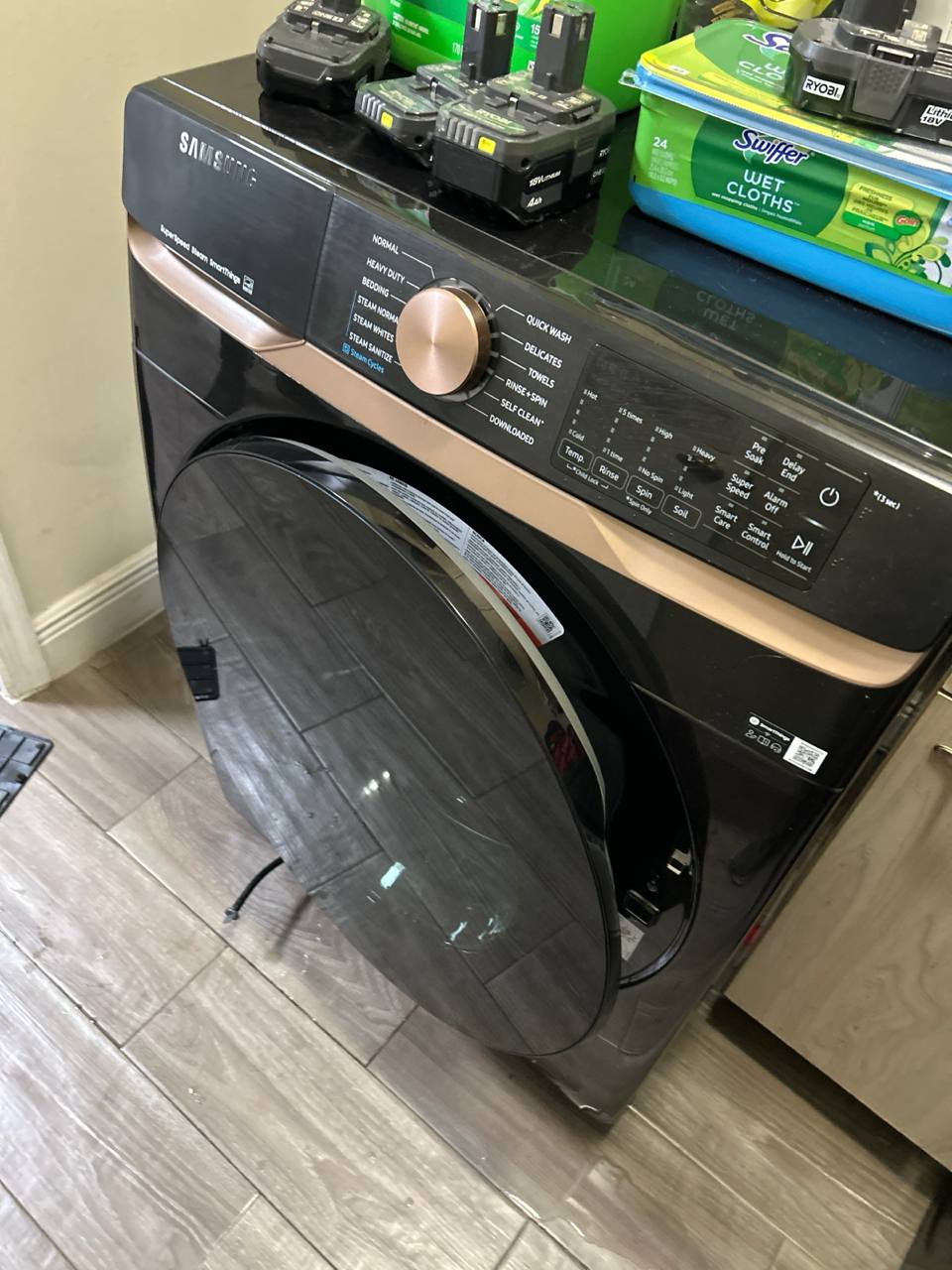
A homeowner in Huntersville, NC called us about a Samsung electric dryer that had developed a loud scraping sound during every cycle — bad enough that they’d stopped using it. Our technician opened the front panel and found the drum glides worn completely through on one side, with visible scoring on the front bulkhead where the drum rim had been making metal contact. The drum rollers also showed early flat-spotting. We replaced the full drum glide kit, both rear rollers, and the idler pulley while the machine was apart. The dryer ran silently on the test cycle. Catching the rollers early saved the homeowner a drum replacement further down the line.
Frequently Asked Questions
Why does my dryer squeak only at the start of the cycle and then stop?
A squeak that fades as the machine warms up is typically early bearing or roller wear. Cold lubricant produces friction until it distributes with heat. This pattern is an early warning the component is wearing out — worth inspecting before it progresses.
My dryer is making a loud thumping — is that the belt or the drum rollers?
Rotate the drum slowly by hand. If the thump occurs at a consistent point in each manual rotation, it’s almost certainly a drum roller with a flat spot. If the drum rotates smoothly by hand but thumps when running under motor power, the belt or idler pulley is more likely involved.
Can worn drum glides damage the drum itself?
Yes. When a glide wears completely through, the metal drum rim scores the front bulkhead. Continued use can damage the drum itself — a significantly more expensive repair than replacing the glides early. If your dryer is scraping rather than squeaking, have it looked at promptly.
How much does it cost to fix a squeaking or noisy dryer?
Most noise repairs involve replacing drum glides, rollers, the idler pulley, or a combination. These are often done together since the machine is already disassembled. Parts are inexpensive; cost is primarily labor. We always diagnose first and give you a clear upfront estimate. Our dryer repair team serves Huntersville and the Lake Norman area with same-day appointments.
Should I repair a noisy dryer or replace it?
For noise repairs — drum glides, rollers, idler pulley, belt — repair almost always makes sense on machines under 10 years old. See our repair vs. replace guide for the full framework.

.svg)
.svg)