The Service Call: Dryer Runs, Tumbles, But Zero Heat
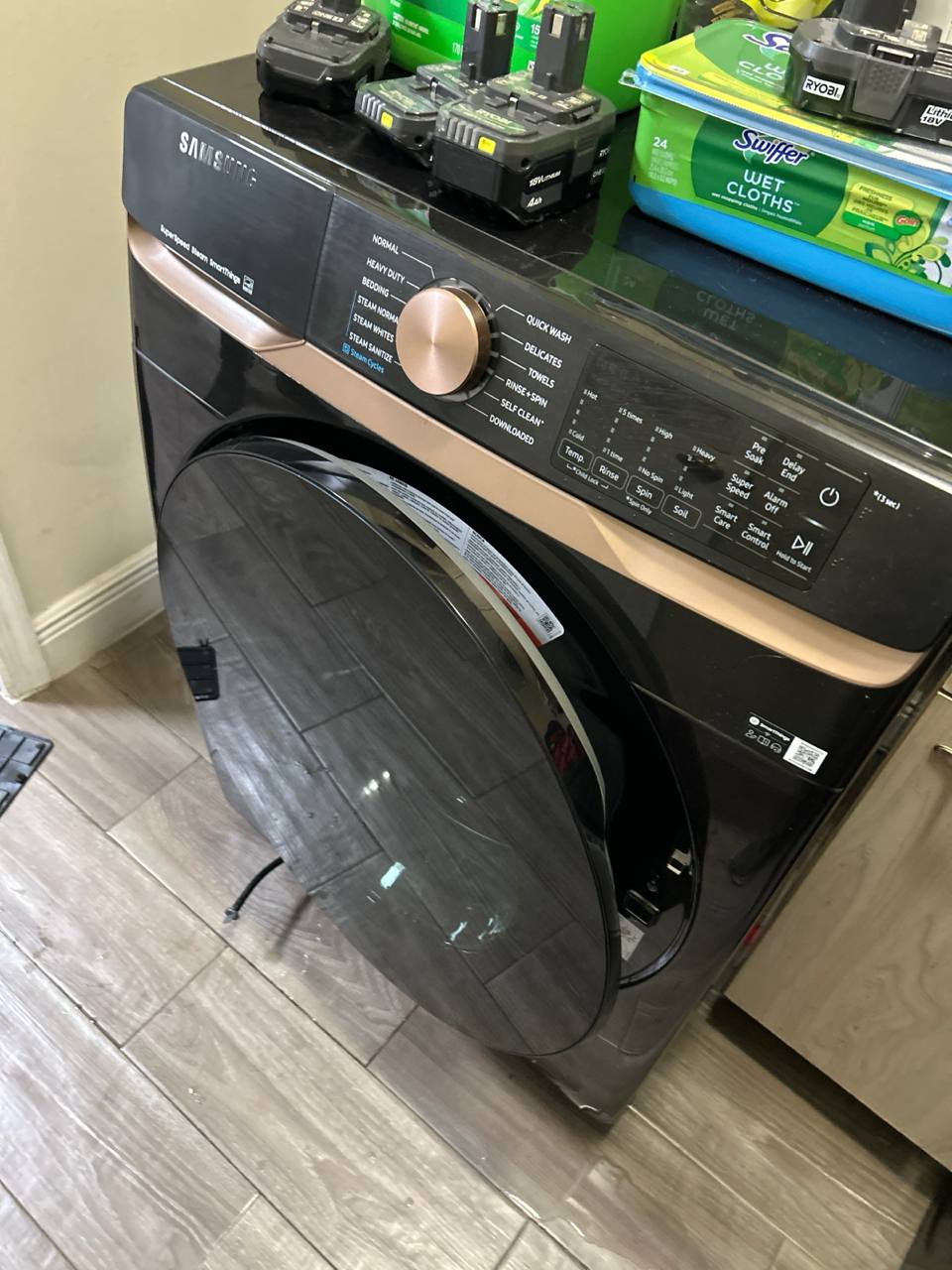
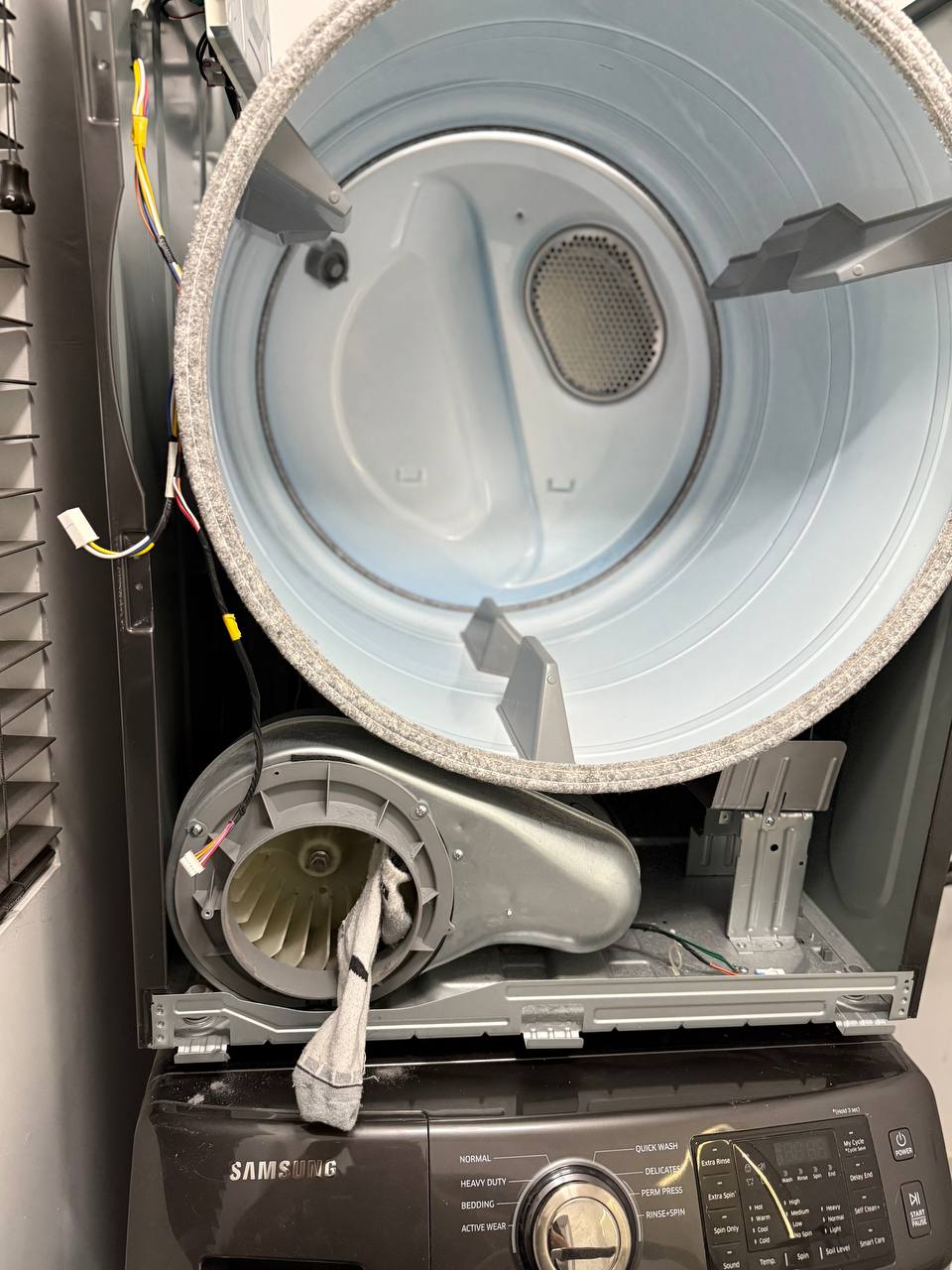
We got the call from a homeowner in Cornelius on a Friday morning. Their Samsung electric dryer — about eight years old — was tumbling perfectly fine but producing absolutely no heat. The display cycled through "drying... cooling" as normal but every load came out just as wet as it went in. No error codes. Our technician fully disassembled the dryer and right away noticed a sock lodged in the blower housing — not the primary cause of the no-heat issue, but worth clearing immediately.
Why Samsung Dryers Stop Heating — The Real Causes
One of the most common patterns we see is homeowners who replace the thermal fuse, then the heating element, then the thermostat, and still have no heat. The frustrating truth is that on Samsung electric dryers, the thermal fuse and heating element are rarely the root cause. Here's what's actually causing the problem:
- Blown thermal fuse from a clogged vent: The thermal fuse blows when the dryer overheats — and it overheats when the exhaust vent is restricted. If your thermal fuse keeps blowing, the vent is almost certainly the real problem. This is the single most misdiagnosed issue on Samsung dryers.
- Control board relay stuck open: When this relay fails in the open position, the heating element never gets power. Testing requires a live voltage check — if it reads 240V across the connector and never drops, the relay isn't closing.
- Tripped circuit breaker — one leg of 240V lost: If one leg trips at the breaker panel, the dryer gets only 120V — enough to tumble but not heat. Always flip the double breaker fully OFF and back ON before opening the machine.
- Failed thermistor: At room temperature it should read approximately 10,000 ohms. A reading far outside this range causes the control board to never call for heat.
- Centrifugal switch failure on the motor: If this switch fails, the motor runs but the heating circuit never closes.
The "I Replaced Everything and It Still Won't Heat" Problem
Stop throwing parts at a Samsung dryer that won't heat. Without diagnosing which component has actually failed, you can replace all of them and still be exactly where you started. Test with a multimeter before replacing anything — these tests take fifteen minutes and tell you exactly which component has failed. For a similar no-heat issue on a different brand, see our Whirlpool dryer not drying guide.
How We Diagnosed This Samsung Dryer
Our technician worked through a systematic diagnosis. The thermal fuse, heating element, and thermostats all tested good. That left the control board relay. He connected his multimeter to the relay connector, started a timed dry cycle, and the meter sat at 240V and never dropped. Control board relay failure, confirmed.
How We Fixed It
- Removed the sock from the blower housing. Left in place it would have restricted airflow and stressed the thermal safety components.
- Replaced the control board. We installed an OEM Samsung replacement, restoring the full heating circuit with a properly functioning relay.
- Cleaned the full exhaust vent run. This machine had moderate lint buildup about halfway through the run. We cleared it fully.
- Checked the terminal block and power cord connections. All connections were clean and tight.
- Ran a full timed dry cycle. Heating element glowing, drum temperature normal, cycle completed with a dry load.
Samsung Dryer Error Codes Related to Heating
- HC / HE / HE1 / HE2: Heating error. Element, thermal fuse, thermistor, or control board depending on model.
- Et / E3: Thermistor error. Out-of-range temperature signal causes the dryer to never call for heat.
- tS / tO: Thermistor short or open circuit. Requires thermistor replacement.
- FE: Frequency error — usually a power supply issue.
- No code displayed: Control board relay and centrifugal switch failures almost never trigger error codes.
Tips to Keep Your Samsung Dryer Heating Properly
- Clean the exhaust vent every 12–18 months. A clogged vent is the primary cause of thermal fuse failures on Samsung dryers.
- Reset the circuit breaker before calling for service. A partially tripped breaker causing one leg of 240V to drop is responsible for a surprising number of no-heat calls.
- Clean the lint trap after every load. It takes five seconds and is the leading cause of dryer fires when neglected.
- Don't overload the drum. Split large loads into two smaller ones to reduce heat stress.
Frequently Asked Questions
My Samsung dryer tumbles fine but has no heat — what's causing it?
Start by resetting the breaker. If that doesn't fix it, a technician can test the thermal fuse, relay, and thermistor in about fifteen minutes. Our dryer repair team serves Cornelius with same-day appointments.
I replaced the thermal fuse on my Samsung dryer and it blew again — why?
Because the thermal fuse isn't the root problem — it's a symptom of overheating from a restricted vent. Have the full vent run professionally cleaned before replacing the fuse again.
My Samsung dryer shows "drying… cooling" but clothes are still wet.
Classic no-heat symptom. The display, motor, timer, and controls work fine — but the heating circuit has failed silently. Typically a thermal fuse, control board relay, or thermistor fault.
How much does a Samsung dryer no-heat repair cost?
Thermal fuse replacement: $95–$150. Control board replacement: $175–$325. Vent cleaning: $80–$120. We always diagnose first and give you a clear upfront estimate.
For most no-heat repairs — thermal fuse, thermistor, control board — repair is the right call on a machine under 10 years old. Samsung electric dryers have a useful life of 10–13 years with proper maintenance.

.svg)
.svg)