The Service Call: A Full Cycle, Zero Spin
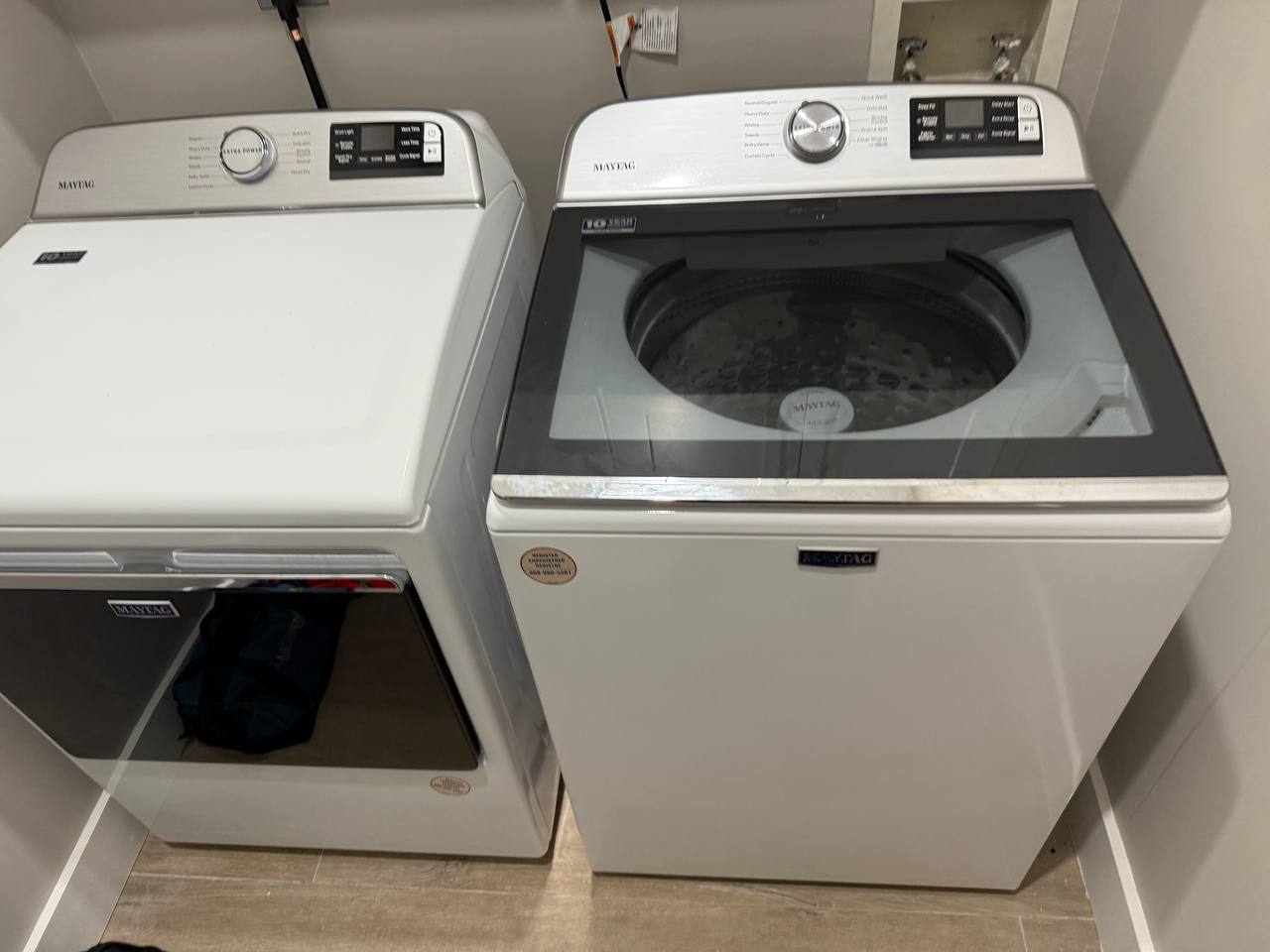
The call came in from a homeowner in Mooresville. Their Maytag HE top-load washer was completing its full cycle but leaving every load completely sopping wet. The machine wasn't showing any error codes. It just ran through its program, beeped when done, and stopped — with clothes that needed to go straight back in for another cycle. Our technician was out the next morning.
Why a Maytag HE Top-Load Washer Stops Spinning
When a washer runs its cycle but the drum doesn't spin — or barely spins — clothes come out heavy and waterlogged. Here are the most common causes we find on Maytag HE top-load washers:
- Lid lock failure: Maytag top-loaders won't spin unless the lid lock engages and signals the control board that the lid is secure. A faulty lid lock switch will prevent the spin cycle from initiating entirely, even though the rest of the wash cycle runs normally.
- Worn or broken motor coupler: The motor coupler connects the drive motor to the transmission. It's designed to fail before the motor does when the machine is overloaded. A broken coupler means the motor runs but the drum doesn't move.
- Failed drive motor or capacitor: If the motor has worn out or the start capacitor has failed, the drum may move sluggishly during wash but lack the power to reach spin speeds.
- Control board issue: A failing board can skip the spin cycle entirely or fail to ramp the motor up to the correct RPM, leaving clothes wet without triggering an error code.
How We Diagnosed the Problem
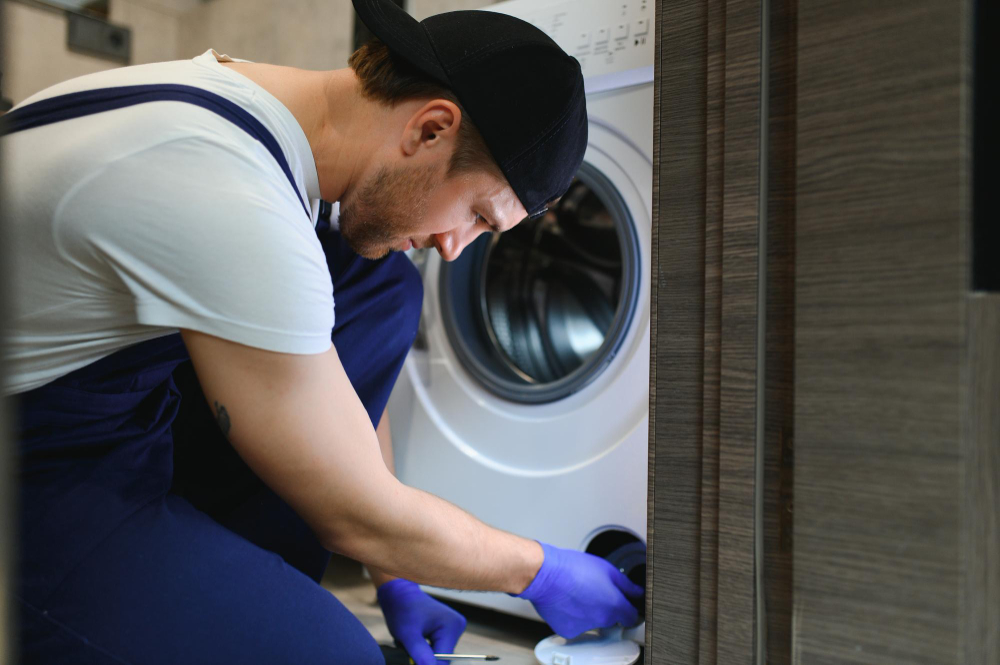
Our technician started with the lid lock — the quickest thing to test and the most common culprit on this model. He found it was reading inconsistently: passing current sometimes, dropping out others. He also found the motor coupler showed early signs of wear and recommended replacing it proactively while the machine was already apart.
How We Fixed It
- Removed the lid lock assembly. Our technician disconnected the wiring harness and pulled the assembly, confirming the internal switch contacts were worn and intermittent under load.
- Installed an OEM Maytag replacement lid lock. Direct-fit replacement — same connector, same mounting points — took about fifteen minutes.
- Replaced the motor coupler proactively. With the cabinet already off, adding twenty minutes for the coupler was well worth it given the visible cracking.
- Ran a full test cycle. A complete heavy-duty cycle with towels confirmed the lid lock engaged correctly and the spin cycle initiated at full speed.
- Checked drum balance and suspension rods. All four suspension rods were intact and seated correctly.
Maytag Error Codes Related to Spin Problems
- F7E1: Motor speed sensing error. Can indicate a motor, hall sensor, or control board issue.
- F0E2: Overloaded drum. The machine senses the drum is too heavy to spin safely.
- Loc / LC: Lid lock error. Intermittent failures often produce no code at all.
- F5E2: Lid lock fault during cycle — often means the lid lock is failing under heat or vibration.
- F6E3: Communication error between the motor control board and main control board.
Tips to Keep Your Maytag Top-Load Washer Spinning Properly
- Don't overload the drum. Fill loosely to the top of the agitator — not packed down.
- Distribute loads evenly. Spread items evenly around the impeller before starting to avoid imbalance.
- Clean the lid lock contacts periodically. A quick wipe every few months keeps the connection clean and reliable.
- Use HE detergent only. Less is more with modern HE washers. If you're also experiencing issues with other brands, read our guide on a LG front-load washer leaking in Lowesville.
Frequently Asked Questions
Why does my Maytag washer run but clothes come out soaking wet?
The most common reason is a failed or intermittent lid lock preventing the spin cycle from engaging. Other causes include a broken motor coupler, worn drive motor, or control board issue. Our washer repair team serves Mooresville with same-day appointments.
My Maytag washer has no error code but won't spin — why?
Intermittent lid lock failures often don't trigger error codes. The switch passes current sometimes and drops out others, which the control board doesn't register as a clean failure.
Can I replace a Maytag lid lock myself?
It's manageable for someone comfortable with appliance DIY, but confirm the lid lock is the actual cause first with a multimeter. Replacing the wrong component wastes time and money.
How much does it cost to fix a Maytag washer that won't spin?
A lid lock replacement typically runs $120–$200. A motor coupler replacement is similar. If the drive motor or control board needs replacement, costs are $200–$400. We always provide a clear estimate before starting work.
Is a Maytag HE top-load washer worth repairing?
In most cases yes, especially if the machine is under 10 years old. A well-maintained Maytag top-loader can last 12–15 years. We'll always give you a straight answer on whether repair or replacement is the smarter call.

.svg)
.svg)